Leonids 2026: When to See November's Meteor Shower and Its Astrological Symbolism
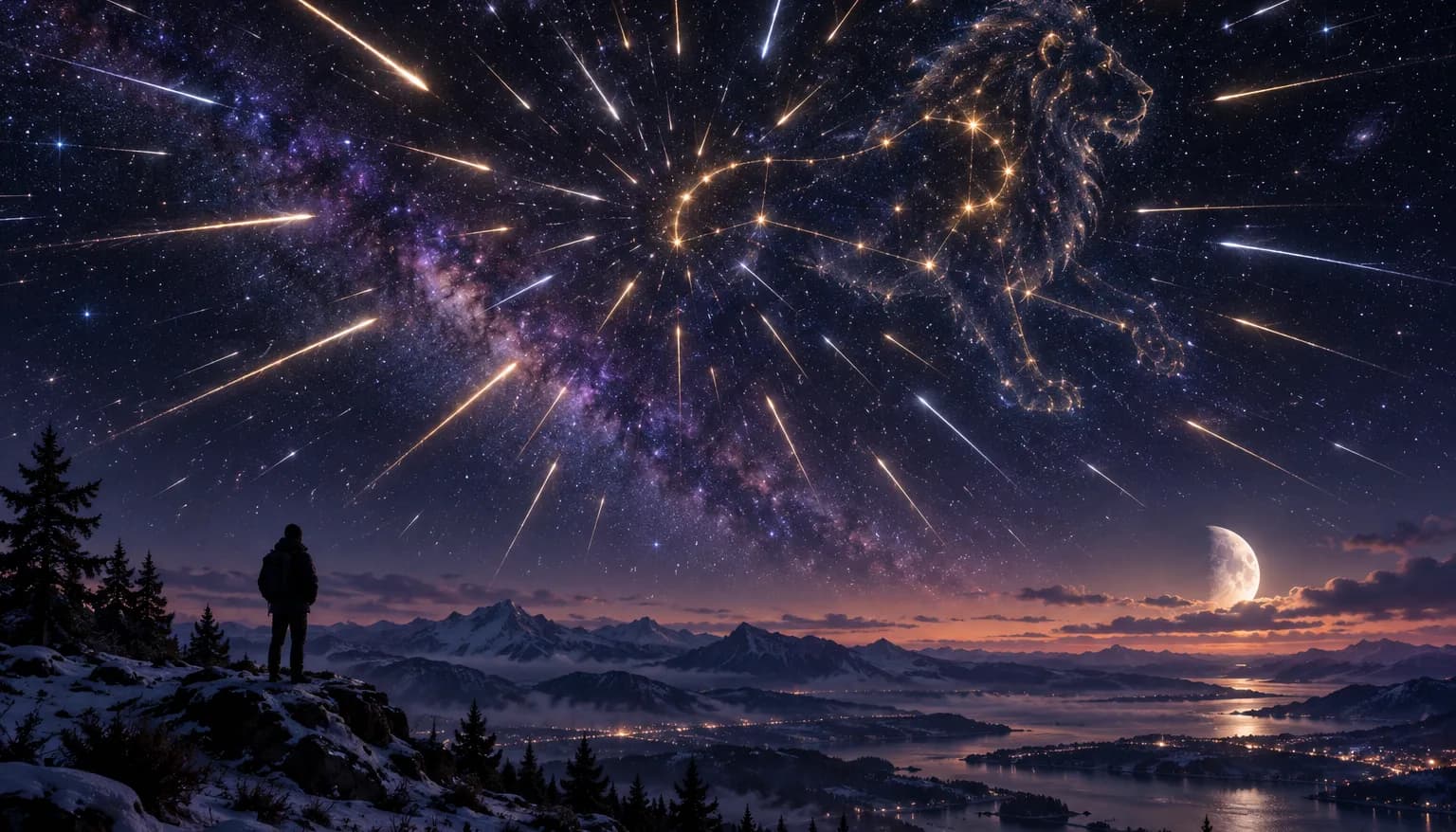
Every November, the Leonids streak across the sky with some of the fastest meteors of the year. In 2026 their peak arrives on the night of November 17-18, with a first-quarter Moon that sets before midnight and leaves the second half of the night free for watching. It is a perfect occasion to combine astronomy with symbolic reflection. At Aspectados we tell you when and how to see them, where they come from and what associations astrologers give them.
What the Leonids Represent in Astrology
Meteor showers are not planetary transits, but symbolic tradition has given them meaning. In the case of the Leonids, astrologers associate:
- Leo's fire: their radiant lies in the constellation Leo, linked to the heart, creativity and self-expression.
- Sparks of inspiration: meteors are read as sudden flashes of ideas or wishes.
- Courage: Leo invites us to show up, shine and lead from the heart.
- A comet's legacy: the remains of an ancient traveler evoke memory, cycles and return.
- A contrast with Scorpio: they arrive while the Sun is in Scorpio, joining emotional depth with creative light.
The Leonids 2026: Viewing Facts
When to watch
The Leonids are active roughly from November 6 to 30. Their peak is expected on the night of November 17-18, 2026; according to the International Meteor Organization (IMO), the nodal maximum falls around 23:45 UT on November 17. Even so, what matters most to the observer is the height of the radiant, which climbs throughout the early morning hours.
The Moon and the best time
On November 17 the Moon is at first quarter (exact at 11:48 UTC) and sets around 11 p.m. local time. That is why the best hours run from midnight until dawn, when the sky is dark and the radiant in Leo is higher.
How many meteors to expect
2026 is not a storm year. Under dark skies, a reasonable expectation is about 10 to 15 meteors per hour. From light-polluted cities you will see far fewer, so it is worth getting away.
Where to look
The radiant lies in the "Sickle" of Leo, the backward question-mark shape near the bright star Regulus. You do not need to stare at the radiant: meteors appear all over the sky, and the ones that show up far from it leave longer trails.
The Origin: Comet Tempel-Tuttle
The Leonids are debris from comet 55P/Tempel-Tuttle, which takes about 33 years to orbit the Sun. Every November, Earth passes through the dust it left behind. Those particles hit the atmosphere at around 71 km/s, one of the highest speeds among the annual showers, which is why the Leonids are known for fast, bright streaks, sometimes with lingering trains.
When Earth crosses a particularly dense cloud of debris, the Leonids can turn into meteor storms. The most famous ones happened in 1833, 1966 and between 1999 and 2001. The 1833 storm was so striking that it is considered one of the sparks of the modern study of meteors.
The Astrological Symbolism of the Leonids 2026
Leo, the heart and Jupiter
The shower symbolically "springs" from Leo, a fire sign ruled by the Sun. In 2026 the symbolism is amplified because Jupiter has been transiting Leo since June 30. Astrologers associate this combination with generosity, creative confidence and the desire to express who we are without asking permission. If you have planets in Leo or a Leo Ascendant, it may be an especially evocative night.
The Sun in Scorpio
The peak happens with the Sun in Scorpio, a few days before it enters Sagittarius on November 22. Scorpio speaks of transformation, looking at what is hidden and being reborn. Leo's shooting stars over a Scorpio sky invite us to turn what we have processed deeply into a new spark of life.
A sky of review
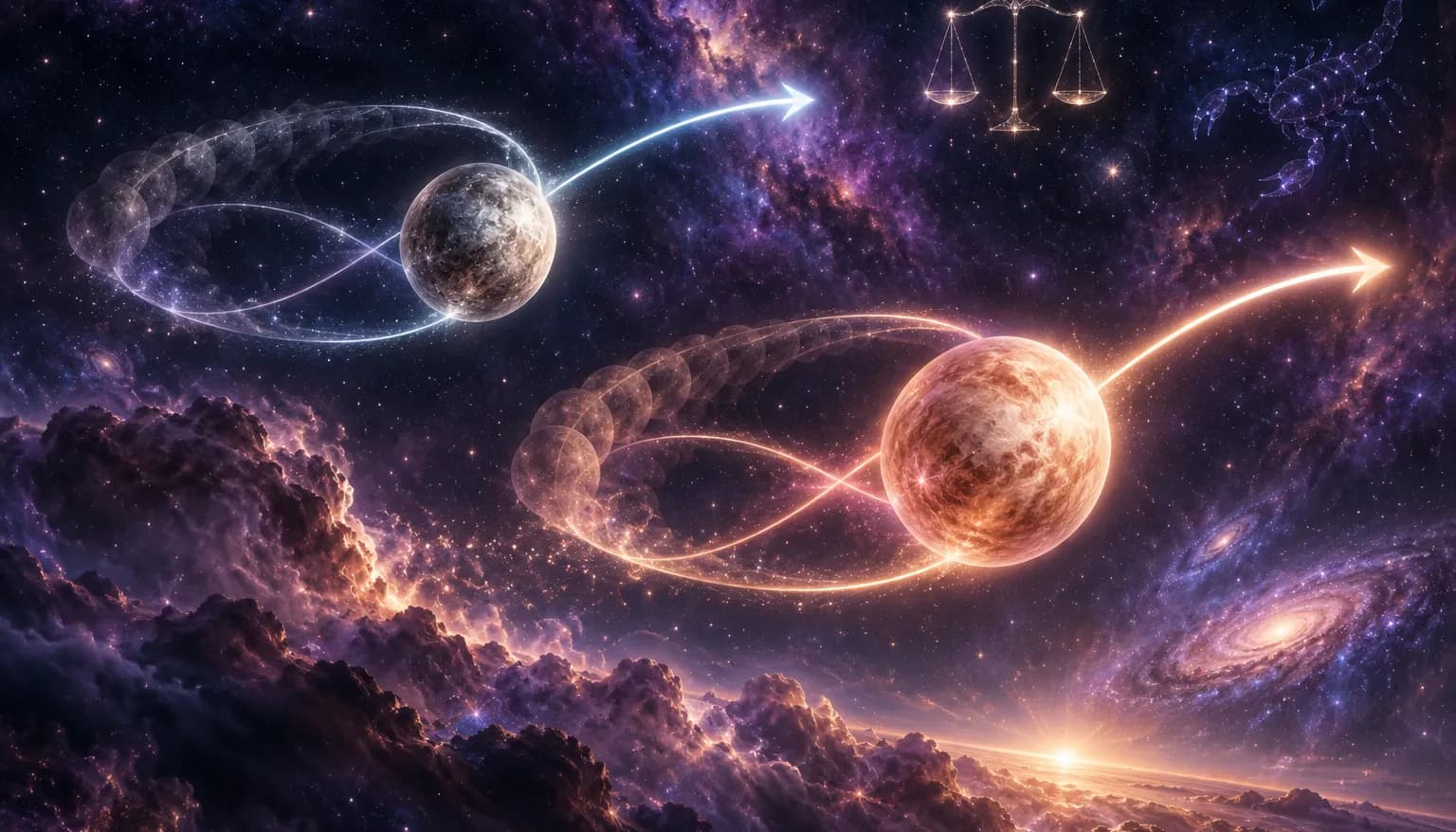
Mid-November coincides with the end of the Mercury and Venus retrogrades, as both turn direct around November 13. Astrologers read this period as a shift from review to action, and the Leonids can serve as a symbol of "relighting" our projects.
By element
- Fire signs (Aries, Leo, Sagittarius): an ideal night to reconnect with passion and courage.
- Earth signs (Taurus, Virgo, Capricorn): make a concrete, practical wish, something you can build.
- Air signs (Gemini, Libra, Aquarius): let ideas flow; write down the ones that come while you watch.
- Water signs (Cancer, Scorpio, Pisces): connect with your emotions and release what no longer warms you.
How to Enjoy the Night: Tips and a Simple Ritual
- Find a dark spot, away from streetlights, with a clear view toward the east.
- Dress warmly: November nights are cold. A mat or reclining chair makes the wait more comfortable.
- Let your eyes adapt: put your phone away and wait about 20-30 minutes for your eyes to adjust to the dark.
- Be patient: at 10-15 meteors per hour, minutes can go by with nothing, and then several may arrive at once.
- Heart ritual: before you start, write on a piece of paper something you want to express or create. With each meteor, repeat it silently. Afterwards, keep the paper and revisit it at the Full Moon in Gemini on November 24.
- Try a photo: if you have a camera with manual settings, use a tripod, a wide-angle lens and long exposures pointed at a dark part of the sky. Patience is key, since most frames will show only stars.
- Have a backup plan: if clouds cover the peak, remember the shower stays active for weeks. The nights just before and after the maximum can still reward you with a few bright streaks, and the symbolic intention matters more than the number of meteors you count.
Conclusion
The Leonids 2026 offer a wonderful night to look up: a peak on November 17-18, a Moon that sets before midnight and swift meteors radiating from the constellation Leo. Beyond the science, astrologers associate them with creative sparks and the courage of the heart. If you want to know how Leo, Jupiter and November's transits connect with your personal chart, discover your birth chart at Aspectados and get personalized AI-powered interpretations.